Fear of God was founded in 2013 by Jerry Lorenzo in Los Angeles — a designer with no formal fashion training, who came to the industry through a circuitous path that included sports marketing (his father, Jerry Manuel, managed the Chicago White Sox and New York Mets) and event production for Diddy and Kanye West.
Lorenzo launched the brand from his apartment with a small initial run of distressed flannels, elongated tees, and leather-paneled denim. Within a year, Kanye West, Justin Bieber, and Virgil Abloh were photographed wearing it. Within five years, Fear of God had reshaped how the American fashion industry thought about the intersection of streetwear, luxury, and spirituality.
The name itself — drawn from Lorenzo's Christian faith — signals the brand's defining tension: garments that are humble in tone yet uncompromising in execution, designed to outlast trend cycles rather than chase them.
Fear of God's aesthetic occupies a deliberate middle ground that didn't quite exist before its arrival — neither traditional streetwear nor classical menswear, but something Lorenzo has called "the American uniform."
Core design signatures include:
Where most streetwear shouts, Fear of God whispers. The branding is almost always discreet — small embroidered tags, debossed logos, henley collars rather than graphics — making it a favorite of consumers who want elevated style without obvious flexing.
Lorenzo built Fear of God as a tiered ecosystem, allowing the brand to serve multiple price points without diluting the main line:
Fear of God Main Line (Seventh Collection and beyond). The flagship runway-tier label, with suiting, outerwear, and tailored pieces ranging from $500 to $5,000+. This is the brand's couture-adjacent expression — slow-paced, seasonless, and increasingly aligned with traditional luxury.
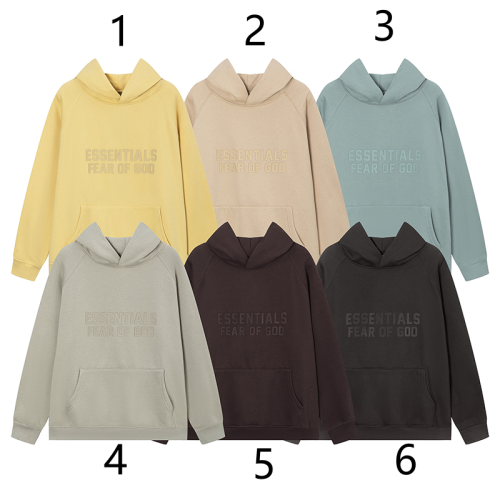
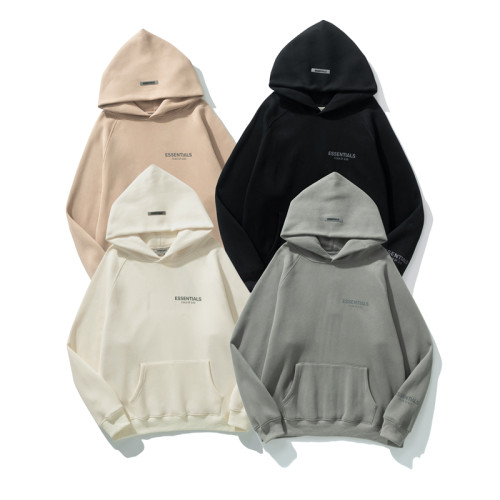
Fear of God Essentials. Launched in 2018 as a more accessible diffusion line, with hoodies, sweatpants, and basics in the $80–$200 range. Essentials became a cultural and commercial phenomenon in its own right, particularly during the 2020–2022 loungewear boom, and is now arguably the most recognizable arm of the brand.
Fear of God Athletics x adidas. A long-rumored, high-profile partnership announced in 2020 that fully launched in 2023, designed to compete with the Yeezy and Jordan ecosystems by reimagining basketball performance and lifestyle wear.
ERMENEGILDO ZEGNA collaboration (2020). A landmark project that merged Italian heritage tailoring with Lorenzo's American sensibility, signaling Fear of God's ascent into bona fide luxury credibility.
In an industry obsessed with weekly drops and viral moments, Fear of God's strategy has been almost contrarian:
1. Slow release cadence. Lorenzo intentionally produces collections infrequently — sometimes a full year or more between main-line drops — positioning the brand closer to luxury houses than to streetwear competitors.
2. Cultural alignment over celebrity endorsement. Rather than paying for placements, Fear of God has built deep, organic relationships with figures like LeBron James, Kanye West, Justin Bieber, Travis Scott, Jay-Z, and members of the K-pop world. The brand has dressed Super Bowl halftime acts, NBA tunnel walks, and Met Gala attendees without traditional advertising spend.
3. Religious and philosophical narrative. Lorenzo has consistently framed the brand around faith, family, and intentionality — a unusual posture in an industry built on hype. This narrative gives Fear of God a coherence and emotional weight that competitors often lack.
4. Direct-to-consumer focus, then selective wholesale. The brand built its early audience online and through limited retail partners (Maxfield, Barneys), eventually opening its first flagship in Los Angeles in 2024 — an architectural statement designed by Lorenzo himself in collaboration with David Thomas.
5. Vertical brand control. Lorenzo has resisted private equity acquisition offers and remained the sole creative voice of the brand, a rarity in modern fashion.
Pricing. Fear of God main line sits firmly in luxury territory — outerwear regularly exceeds $2,000, suiting can reach $5,000, and limited pieces command significantly more. Essentials fills the accessible tier with hoodies at $90–$120, making it one of the most successful diffusion lines of its generation.
Cultural moment. Fear of God has been a primary driver of the broader "quiet luxury" movement that defined fashion in 2023–2025, alongside The Row, Loro Piana, and Brunello Cucinelli. The brand's monastic palettes, oversized tailoring, and unbranded approach were arguably ahead of the trend rather than following it.
The Essentials phenomenon. During the pandemic, Fear of God Essentials became the de facto uniform of a generation — a status accelerated by ubiquity at PacSun, SSENSE, and SSENSE-adjacent retailers. The line's commercial success funded the main brand's expansion into luxury territory but also raised questions about overexposure, which the brand has managed by quietly tightening distribution and reducing drop frequency since 2024.
The adidas Athletics partnership is shaping up to be a defining test — both commercially and creatively — as Fear of God enters direct competition with established performance and lifestyle brands. Early releases, including the Athletics I sneaker and basketball capsules, have generated strong critical reception even as commercial reception has been mixed.
Fear of God's most significant contribution may be proving that American fashion can produce serious luxury. For decades, the conventional wisdom held that true luxury came from European heritage houses — Italy, France, occasionally Britain — while America was relegated to sportswear, denim, and casualwear. Lorenzo helped dismantle that hierarchy.
By marrying the silhouettes and emotional resonance of American streetwear with the materials, craftsmanship, and pacing of European luxury, Fear of God created a template that has since been emulated across the industry. The brand sits in conversation with Rick Owens, The Row, and Bottega Veneta as much as with Off-White or Supreme — a cross-category position few brands have achieved.
Lorenzo himself has become one of the most respected figures in American fashion, named to the CFDA, profiled in The New Yorker and Vogue, and increasingly cited by a younger generation of designers as a primary influence.
Fear of God's challenge in the late 2020s is the inverse of most streetwear brands: rather than fighting irrelevance, it must manage the consequences of success. As Essentials nears saturation, as the adidas partnership matures, and as quiet luxury inevitably gives way to the next aesthetic cycle, Lorenzo will need to evolve the brand without abandoning the slow, intentional ethos that built it.
Expect continued investment in flagship retail, deeper exploration of tailoring and formalwear, expansion of the adidas Athletics line into global markets, and selective creative collaborations that reinforce — rather than dilute — the brand's luxury positioning.
Whatever comes next, Fear of God has already secured its place as the defining American fashion brand of its generation — a Los Angeles experiment that proved restraint, faith, and patience could compete with hype.