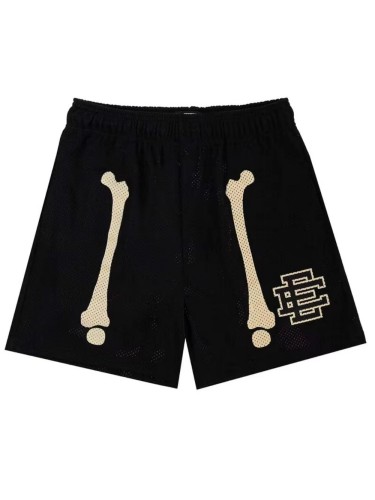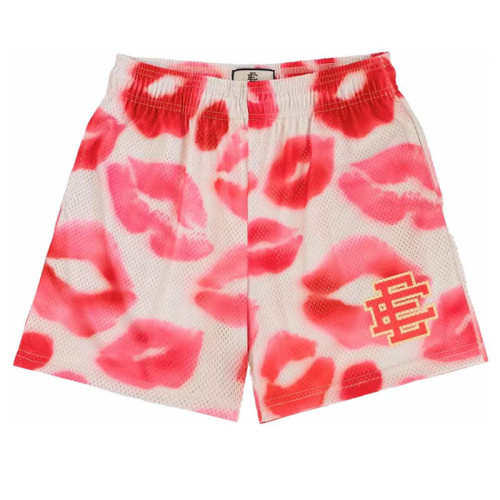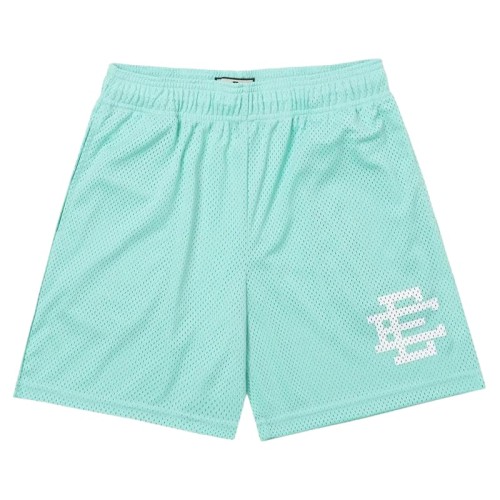
Eric Emanuel, the brand, was founded in 2015 by its namesake designer — a Syracuse University graduate who studied fashion design and cut his teeth working at Ralph Lauren and then on a short-lived womenswear label before pivoting fully to menswear. Operating out of New York City, Emanuel launched the brand with a deceptively simple proposition: take the basketball mesh short — a piece of pure American athletic vernacular — and elevate it through premium materials, custom embroidery, and made-in-USA construction.
A decade later, that single product category has become one of the most recognizable silhouettes in contemporary streetwear, worn by NBA stars, rappers, and a generation of young men who grew up on AAU basketball, sneaker culture, and 1990s sports nostalgia.
The brand's rise is one of the more unlikely success stories in modern American fashion: a designer who built an empire not by chasing luxury credentials or hype-driven scarcity, but by perfecting one product and earning loyalty one collaboration at a time.
Eric Emanuel's aesthetic is rooted in a specific cultural memory: the American sporting goods store of the late 1980s and 1990s, when team logos, varsity jackets, and mesh practice gear defined what young men wore both on and off the court.
Core design signatures include:
The underlying philosophy is nostalgia without irony. Emanuel doesn't subvert the codes of American sportswear — he honors them, then refines them through better fabric, better construction, and better fit.
Where many designers chase European luxury legitimacy or build their brands through manufactured scarcity, Eric Emanuel has taken a different path — one built on strategic, culturally resonant partnerships.
1. The Adidas partnership. Beginning in 2019, the ongoing Eric Emanuel x adidas collaboration has become one of the most consistent and commercially successful partnerships in sneaker culture. Releases of the Forum, Forum Low, McNasty, and Crazy IIInfinity have delivered repeated sellouts and helped reposition adidas Originals in the post-Yeezy era.
2. The Reebok partnership. A separate, longer-running collaboration with Reebok — particularly on the Question Mid silhouette closely associated with Allen Iverson — has cemented Emanuel's credibility within sneakerhead and basketball-purist communities.
3. Sports licensing. Emanuel has secured official partnerships with the NBA, MLB, NFL, NHL, NASCAR, and major college programs — a rare achievement for an independent designer. These deals allow him to legitimately use team marks across mesh shorts, jackets, and capsule collections, generating both revenue and cultural credibility.
4. Brand collaborations beyond sport. Partnerships with McDonald's, Adam Sandler's Happy Madison, the New York Knicks, Bergdorf Goodman, and others have expanded the brand's cultural footprint without diluting its core identity.
5. Celebrity organic adoption. LeBron James, Travis Scott, A$AP Rocky, James Harden, Bad Bunny, and dozens of NBA players have worn Eric Emanuel without paid endorsement deals — a testament to the brand's authenticity in basketball-adjacent culture.
Eric Emanuel has grown thoughtfully rather than aggressively. The brand's first standalone flagship opened in New York's Lower East Side in 2022, designed as an immersive retail environment that blends sporting goods store nostalgia with contemporary gallery aesthetics. A second flagship opened in Los Angeles in 2023, expanding the brand's bicoastal presence.
Distribution beyond direct-to-consumer remains carefully managed, with the brand sold through select premium retailers including SSENSE, END., and Bergdorf Goodman — positioning that signals luxury credibility without sacrificing accessibility.
The brand's e-commerce site has become a destination in its own right, with weekly product drops, custom embroidery options, and frequent capsule releases that maintain engagement without exhausting the audience.
Pricing. Eric Emanuel mesh shorts retail between $150 and $230, varsity jackets and outerwear range from $400 to $1,200, and limited collaboration pieces command higher prices on both retail and resale markets. The pricing places the brand in the "elevated streetwear" tier — premium relative to mall sportswear, accessible relative to European luxury.
Cultural moment. The brand has benefited from the broader resurgence of 1990s and Y2K sportswear nostalgia, the continued cultural dominance of basketball as a fashion driver, and the ongoing premiumization of athletic wear that has lifted brands across the category. Eric Emanuel has positioned itself as the most credible American voice in this conversation.
The basketball connection. NBA tunnel-walk fashion has become a major cultural force, and Eric Emanuel pieces appear on tunnel feeds nightly during the season. This organic exposure functions as advertising no media budget could replicate.
Resale dynamics. Limited Eric Emanuel x adidas Forum colorways and rare collaboration shorts trade well on StockX and GOAT, though the brand has generally avoided the speculative bubble that affected peers during the 2020–2022 streetwear peak. Pricing on the secondary market remains rational — a sign of healthy demand without overheated hype.
Eric Emanuel's most significant achievement may be legitimizing American sportswear nostalgia as a serious fashion category. Before the brand's rise, mesh shorts and varsity jackets were dismissed as either purely athletic or purely commercial — items for the gym or the team store, not for design discourse.
Emanuel reframed these pieces as heritage objects worth refining, and in doing so opened space for a generation of designers reinterpreting American sports vernacular. The brand sits in conversation with Rhude, Aimé Leon Dore, and Bode as part of a uniquely American moment in fashion — one rooted in regional memory, sport, and craft rather than European luxury codes.
Eric Emanuel himself has become one of the more visible designers of his generation, known for an unusually transparent and accessible public persona — active on social media, candid about business, and consistently present at the events and games his customers care about.
The brand's challenge in the late 2020s is scaling without losing intimacy. As the customer base grows, as collaborations multiply, and as the mesh short silhouette saturates the market, Emanuel will need to evolve the brand into new categories without abandoning the cultural specificity that built it.
Expect continued investment in tailoring and outerwear, deeper exploration of women's product, expanded flagship retail in additional cities, and ongoing partnerships with adidas, Reebok, and the major American sports leagues. A move into footwear under the Eric Emanuel name — independent of collaboration partners — has been long rumored and would represent a significant step.
Whatever direction the brand takes, Eric Emanuel has already accomplished something rare: he turned a single product into a cultural language, then built an entire brand around speaking it fluently. In doing so, he proved that in 2025's fashion landscape, the most powerful luxury isn't European heritage or scarcity — it's authenticity, executed perfectly.