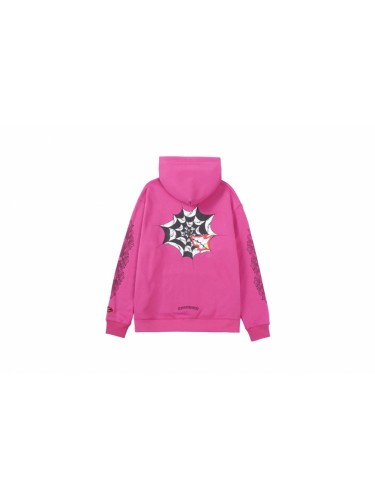
Chrome Hearts was founded in 1988 in Los Angeles by Richard Stark, a former carpenter and motorcycle enthusiast with no formal training in fashion or jewelry design. Working initially out of a small Hollywood workshop alongside leather craftsman Leonard Kamhout and silversmith John Bowman, Stark began producing custom leather riding gear and heavy sterling silver hardware for friends in the Los Angeles biker, music, and film communities.
The brand's first commercial breakthrough came when Cher wore a Chrome Hearts piece on tour, followed quickly by adoption from members of Guns N' Roses, Aerosmith, and the broader hard rock world. By 1992, Chrome Hearts had won the CFDA Award for Accessory Designer of the Year — a remarkable achievement for a brand operating entirely outside the traditional fashion establishment.
Nearly four decades later, Chrome Hearts has evolved from a Hollywood biker-jewelry workshop into one of the most quietly influential luxury houses in the world — and arguably the last major luxury brand still owned, controlled, and creatively directed by its founding family.
Chrome Hearts is built on a single uncompromising principle: everything is made by hand, in-house, in America. In an era when even heritage European luxury houses outsource components to global suppliers, Chrome Hearts maintains vertically integrated production across leather goods, silver, gold, eyewear, furniture, and apparel — much of it produced at the brand's massive Hollywood headquarters and adjacent facilities.
Core design signatures include:
The underlying philosophy combines American biker counterculture, gothic decorative tradition, rock'n'roll iconography, and obsessive craft maximalism. Chrome Hearts is loud and quiet at once — visually maximal in its decorative codes, but operationally restrained in how it presents itself to the world.
Chrome Hearts has built one of the most valuable independent luxury businesses in the world by deliberately rejecting nearly every conventional fashion industry practice.
1. No advertising. Chrome Hearts has, with rare exceptions, never run print, digital, or outdoor advertising. The brand does not court press coverage, rarely grants interviews, and has no formal PR apparatus.
2. No e-commerce. Despite operating in a fully digital retail era, Chrome Hearts has consciously avoided launching an e-commerce platform. Product is sold exclusively through the brand's own boutiques and a handful of carefully selected wholesale partners — a posture that creates friction, scarcity, and pilgrimage culture around the stores themselves.
3. No fashion week presence (until recently). Chrome Hearts operated for decades without showing at fashion week, only beginning to participate selectively in recent years through events tied to the founder's daughter, Jesse Jo Stark, and son, Frankie Stark.
4. Family ownership and creative control. Richard Stark remains the principal creative voice, alongside his wife Laurie Lynn Stark and their children, who have grown into significant creative roles. The brand has refused private equity acquisition and conglomerate offers reportedly exceeding several billion dollars.
5. Celebrity adoption through proximity, not contracts. Travis Scott, Drake, Bella Hadid, Kendall Jenner, Rihanna, the Beckhams, Kanye West, Karl Lagerfeld, and dozens of other figures have worn Chrome Hearts extensively without paid endorsements. Many have personal relationships with the Stark family.
6. Boutiques as cultural environments. Chrome Hearts flagships in Los Angeles, New York, Tokyo, Paris, Honolulu, Seoul, Hong Kong, and London are designed as immersive worlds — featuring custom Chrome Hearts furniture, leather, lighting, and detailing throughout. The boutiques function as architectural statements as much as retail spaces.
Pricing. Chrome Hearts occupies the upper tier of luxury accessories pricing. Sterling silver rings start around $400 and climb past $5,000; chains and pendants regularly exceed $10,000; gold pieces reach into six figures; leather jackets range from $5,000 to $25,000+; and one-of-a-kind custom pieces command prices comparable to fine jewelry from heritage houses.
Cultural moment. Chrome Hearts has been a primary beneficiary of the silver and chunky jewelry revival that has defined men's accessories from roughly 2019 onward, as well as the broader cultural shift toward maximalist, decorative, and craft-driven luxury that has emerged in reaction to the quiet luxury movement.
Hip-hop and pop culture saturation. No luxury brand is more deeply embedded in contemporary hip-hop and pop iconography than Chrome Hearts. References to the brand appear constantly in lyrics, music videos, social content, and tour styling — a cultural footprint achieved without paying for any of it.
Resale and collectibility. Vintage Chrome Hearts pieces — particularly limited graphic tees, hoodies, and rare jewelry from the 1990s and early 2000s — trade at significant multiples on platforms like Grailed and at vintage specialists. The brand has effectively become a collectible category, with provenance and era of production materially affecting value.
Estimated revenue. Although Chrome Hearts does not publicly report financials, industry estimates place annual revenue between $1 billion and $2 billion — a remarkable figure for a privately held, family-owned business with no advertising, no e-commerce, and a deliberately limited retail footprint.
Chrome Hearts' most significant achievement may be proving that the conventional rules of luxury growth are optional. Every contemporary playbook — digital marketing, e-commerce expansion, conglomerate ownership, fashion week visibility, celebrity endorsement contracts — has been rejected, and the brand has thrived anyway.
In doing so, Chrome Hearts has demonstrated that authentic craft, family creative control, and genuine cultural relationships can build a luxury house as valuable as the heritage European maisons, on a fraction of the operational footprint and without compromising creative integrity.
The brand also helped pioneer a category that has since become central to contemporary menswear: luxury silver jewelry as a daily-wear category for men. Before Chrome Hearts, fine jewelry for men was largely confined to wedding bands and watches; today, chunky sterling rings, chains, and pendants are a foundational piece of contemporary male style, and Chrome Hearts is the brand that defined the category.
Beyond jewelry, the Stark family has cultivated a creative ecosystem that includes Jesse Jo Stark's solo music and fashion projects, Frankie Stark's design work, and ongoing collaborations with figures across art, music, and film — extending the Chrome Hearts universe well beyond product into something closer to a cultural institution.
Chrome Hearts' challenge in the late 2020s is the inverse of nearly every other luxury brand: rather than fighting for relevance, the brand must manage the consequences of overwhelming cultural ubiquity while preserving the intimacy, scarcity, and craft authenticity that built it.
Expect continued category expansion (the brand has steadily moved deeper into furniture, hospitality, and lifestyle), selective new boutique openings in key global cities, deeper engagement with the Stark family's next generation as creative leadership transitions, and continued resistance to acquisition pressure from luxury conglomerates that have circled the brand for decades.
Whatever direction Chrome Hearts takes, it has already accomplished something that may now be impossible to replicate: it has built a multi-generational, multi-billion-dollar luxury house entirely on its own terms, and in doing so reminded the industry that the most powerful luxury isn't conglomerate scale or marketing reach — it's craft, family, and the courage to ignore every rule the industry insists matters.